
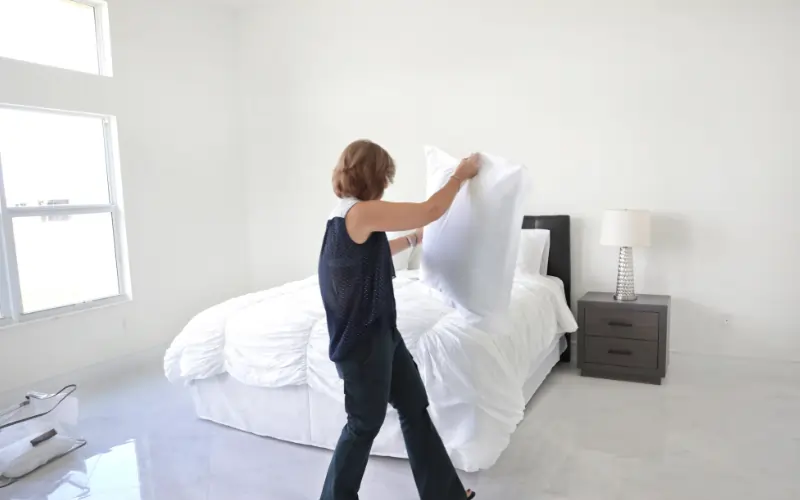
When you’re getting ready to put your Florida home on the market, first impressions matter, and most buyers know within a few minutes if the house they’re looking at is worth pursuing. They want to picture themselves living in the space, which is why home staging has become such an invaluable tool for sellers. Staging helps your property stand out, not just in the typical online listings, but during open house events and critical private showings.
That’s why we’ve put together this guide to help you answer the bigger question of “what is home staging?”, while giving you a practical breakdown of the different types of staging. We’ll also cover some general cost information and best practices if you’re going DIY instead of hiring a staging company. By the end, you’ll know why staged homes attract more potential buyers and typically sell faster. Staging can make a big difference in today’s real estate market, and with our information, you’ll be ready to capitalize on that.
In short, home staging is what it’s called when you prepare a residential setting in a way that appeals to the widest range of potential buyers. Rather than focusing on your personal style, staging is designed to show off the home’s best features, arranging rooms in the best possible light. There are two main types of staging:
Tons of sellers who don’t want to deal with the hassle will turn to a professional home stager, or even a home staging company, to handle staging their whole house. Sellers who work with a real estate agent will usually have a professional stager recommended to them.
Organizations like the Real Estate Staging Association and the National Association of Realtors have said time and time again that while there is a cost to stage, staging is an important factor in getting the home sold quickly.
Florida’s housing scene is incredibly competitive, which means staging isn’t just a finishing touch before taking the listing photos. Most home stagers treat the staging process as a strategic move. Since dozens, even hundreds, of potential buyers browse online listings every day, staged homes help the buyers more easily imagine themselves living in the space.
This is particularly important for the really hot Florida markets like Clearwater, Miami, Orlando, and Tampa, where real estate agents generally see higher baseline levels of demand.
Staging can help make open houses much more effective. A living room can be made much more welcoming with fresh flowers, removing furniture that doesn’t fit, and adding more furniture that can be neatly arranged to highlight the space.
One of the first questions homeowners ask is, “How much does home staging cost?” The answer depends on the size of your house, the type of services, and the local market in Florida.
Hiring a professional home stager or staging company often starts with an initial design consultation, typically for a flat fee of a few hundred dollars. From there, costs vary:
Certain rooms have more influence on buyers than others, making them the best places to focus your staging budget. Once you get major issues and that weird old house smell taken care of, it’s time to focus on more specific areas of the home.
By narrowing your focus to these high-impact areas, you’ll be able to make a big difference to your home’s worth, with minimal overall cost to stage.
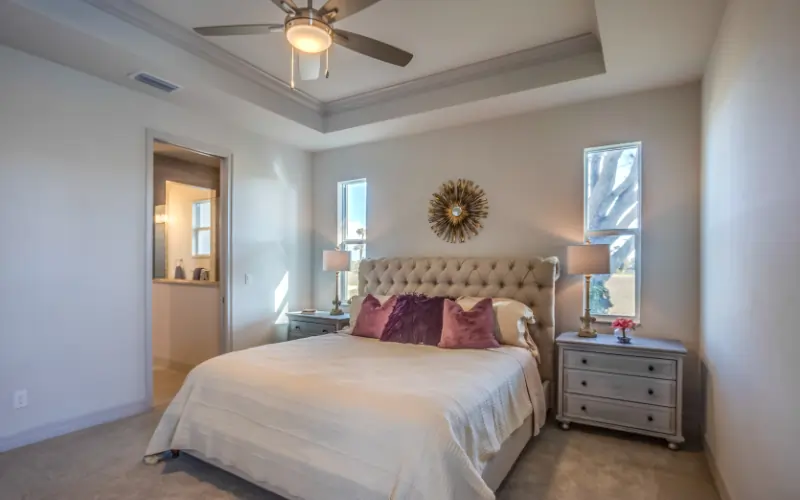
We mentioned that first impressions are wildly important when you’re trying to sell a Florida home, and those impressions are starting to form before clients ever set foot inside the home.
Improving curb appeal is an easy but high-value way to help your listing stand out in the sunny Florida market. Quick touches like planting some fresh flowers, mowing, trimming, and giving the front yard a general once-over can really change the way buyers feel when they walk up to the front door.
Once the big stuff, like mowing and hedge trimming, is out of the way, look for the smaller details that are really going to “wow” your potential buyers. Paint the front door, tidy up the front porch, and update older lighting fixtures with newer smart fixtures that give your home a high-tech feel.
It shouldn’t come as any big surprise that most potential buyers are starting their home search online, which means virtual staging has become a super-powerful tool.
Instead of the massive hassle and house staging cost associated with real furniture rental, virtual staging uses digital design and generative AI engines to show your empty house elegantly staged with designer furniture, art, and decor. Virtual staging is particularly powerful for new construction, condos, or homes that are largely vacant, since it’s more affordable than physical staging.
If you go this route, one of the most important things to do is get professional listing photos. Use the best possible light at the perfect time of day to capture that ideal instant for your listings. Even small touches like showing color-coordinated fresh flowers or showing the prodigious window views can help set your property apart when someone’s scrolling through listings.
Overall, the goal is to get buyers to click through, rather than scroll past. So, if you’re getting ready to list, make sure you go through the whole checklist of fixes to do before you sell, so you can get the best return on your time and effort.
Not every buyer looks at a home in the same way. Buyers looking for their next family home are looking at completely different things than cash buyers and investors. Cash buyers are typically more focused on the numbers, so for them, seeing well-staged homes is different. A clean, clutter-free, well-arranged home has green flags for a sales process with less hassle, lower repair costs, and a smoother resale process overall.
For Florida sellers who want to close quickly, staging doesn’t have to mean a full makeover. Simple steps like rearranging furniture, updating paint colors, and highlighting key areas like the living room and the master bedroom can help bring in more serious offers.
Since investors and cash buyers are generally looking to save money, they nearly always buy homes as-is, perfect for situations like selling a home with unpermitted work. That said, staged homes can help illustrate the home’s market potential and fair market value more clearly for buyers.
Even when you break things down into stages, it can still feel overwhelming at times. To help make it as easy and incremental as possible, we’ve made this simple checklist for you. Just run down the list, and by the end, you’ll be ready to list your professionally staged home.
If you still aren’t sure if you want to stage your home, weigh the overall cost of staging against the value that it adds to the property. In most cases, the return is obvious and substantial.
For clients, realtors, and sellers, staging is one of the most important ways to reduce the total time on the market.
Staging your home means more than just cleaning up and decorating. It’s a solid, reliable strategy for selling your home faster and at a higher price. Small changes can add up to big value, so if you’re ready to maximize your home’s value, reach out to The Best Cash Home Buyer for step-by-step guidance and service.
