
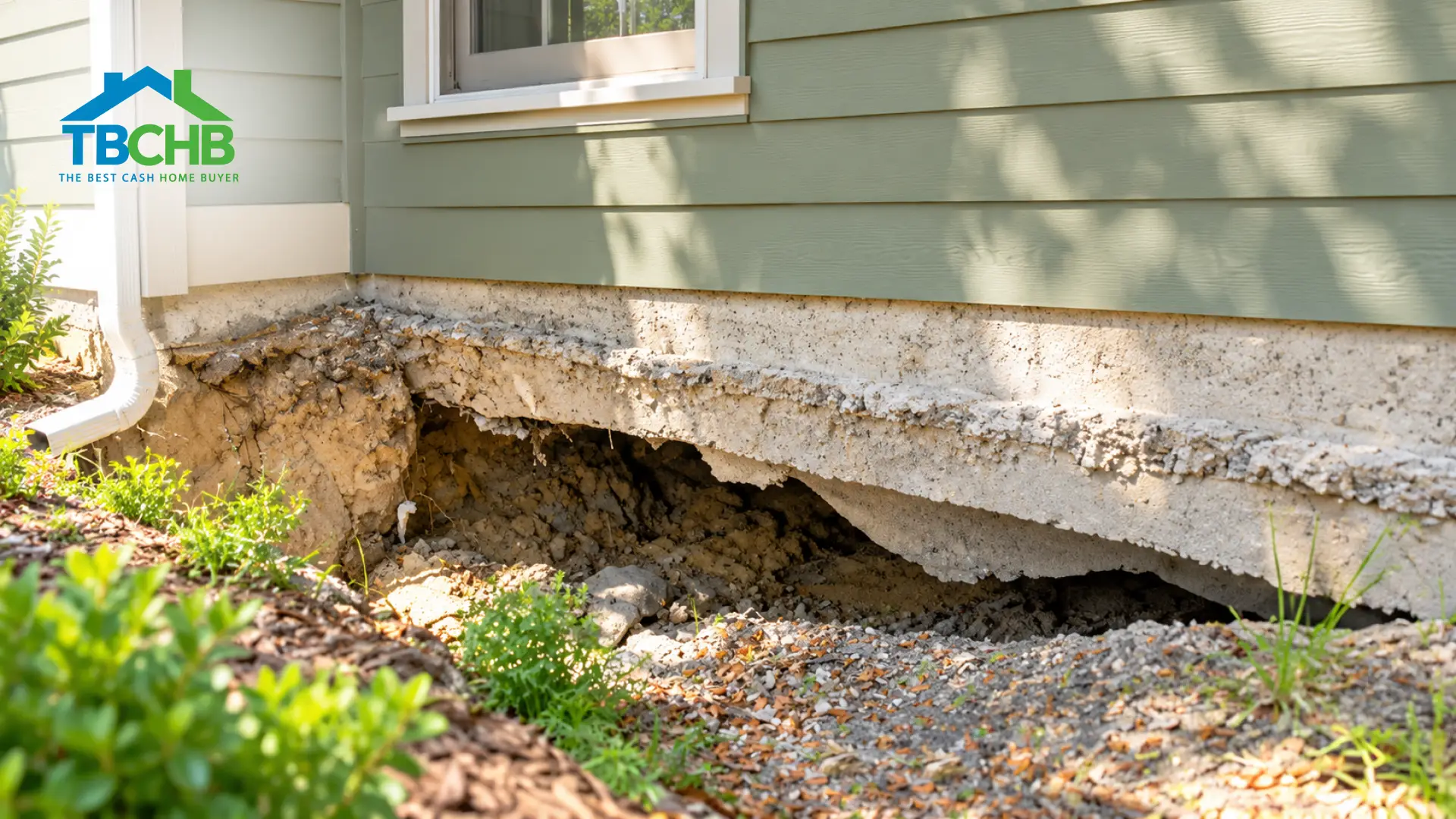
You’re at your Tampa kitchen table staring at a crack running up the wall, replaying every sinkhole story you’ve heard. Your neighbor mentioned sinkhole history nearby, and now you’re searching sinkhole damage house Tampa wondering if your place is unsafe or unsellable. This guide covers warning signs, safety steps, insurance basics, and your real options for fixing or selling as-is.
Sinkhole damage happens when the ground under or around your house shifts because rock below dissolves and settles. That movement can crack or shift your slab, walls, driveway, or yard. Tampa and much of Florida see this often enough that homeowners here take new cracks seriously.
We’ll stay calm, put safety first, and then talk through the money piece in a way that actually fits life in Tampa Bay. That means walking through warning signs, what to do if something looks serious tonight, and how insurance, disclosure, and your selling options all fit together.
Sinkhole damage in Florida is ground movement that can crack or tilt your home’s foundation, slab, walls, driveway, and yard. A sinkhole can happen when water dissolves softer rock underground, and the material above settles, sags, or drops over time.
There are a few basic ways this shows up around a home:
| Type | What It Looks Like |
| Solution sinkholes | Gradual settling; slow grading changes or old, unchanging cracks |
| Cover subsidence sinkholes | Soil sags over time, creating uneven lawns or low spots |
| Cover collapse sinkholes | Surface gives way suddenly, creating holes and rapid cracking |
Not every crack means a true sinkhole problem. Older Florida block homes often have small, long-standing step cracks near garages or additions. If those cracks haven’t changed in years, they’re likely age and settling, not active movement. New cracks that widen quickly, doors that suddenly won’t close, or a fresh yard depression deserve attention. Only licensed engineers, geologists, and appropriate agencies can confirm whether you’re dealing with a true sinkhole or another issue like erosion or broken pipes.
Definition: Sinkhole damage is harm to a home caused by ground shifting as underlying rock dissolves and settles, cracking or moving the structure and yard.
Local cash buyers who walk Tampa neighborhoods regularly get used to sorting cosmetic cracks from serious soil problems. When they make an offer, they factor that risk into the price so you aren’t left guessing what happens after inspection. Here in Tampa, we’ve seen a little bit of everything happening under a house. That experience helps separate what’s likely a cosmetic quirk of an older block home from a pattern that genuinely needs an engineer’s attention before anyone signs a contract.
The warning signs of sinkhole-related problems are visible changes in your house and yard that suggest the ground might be shifting. You’re looking for patterns and timing, not just one flaw.
| Location | What to Watch For |
| Interior | Stair-step wall cracks, doors sticking, sloping floors, spiderweb tile cracks, cabinets pulling from walls |
| Exterior | Foundation or slab cracks, gaps between slab and walls, driveway pulling away, leaning porch posts |
| Yard | Fresh depressions, soft or spongy spots, new low areas collecting water, tilting trees or fence posts |
One common Tampa scenario: a long-time block home picks up new diagonal cracks at door corners, and within weeks the bedroom door won’t close without a shove. That kind of change is worth noticing.
Sudden movement is more concerning than long-standing imperfections. A tiny crack that hasn’t changed in years is usually less worrisome than one that keeps widening. Popping sounds, tiles lifting quickly, or doors jamming suddenly are all signs to call a professional.
• A visible hole or large depression forming near the house
• Rapidly spreading cracks in walls, slabs, or the ground
• Utility lines breaking, strong gas smells, or ruptured water lines
If you see active collapse, a large sudden hole, or broken utilities, get everyone and pets out and away from the area, then call 911. Traditional buyers and lenders focus on these same signs and may ask for invasive testing or walk away entirely. A local cash buyer used to Tampa’s soil issues expects some cracks and quirks.
That familiarity means they factor what they see into an as-is offer instead of dragging you through months of repair negotiations. You get a straightforward answer instead of a drawn-out back-and-forth over every hairline crack an inspector flags.
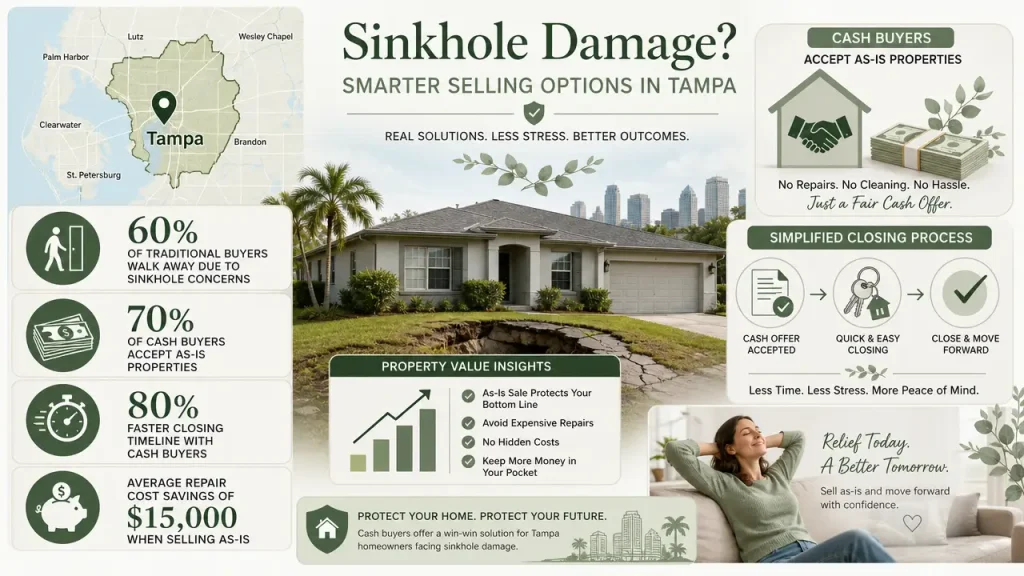
If you think your Tampa house might be dealing with sinkhole activity, start with safety and work step by step.
1. Get everyone out first if it looks dangerous. Rapid ground movement, a forming hole, major new cracks, or broken utilities mean everyone and pets should leave immediately.
2. Call 911 for active collapse or broken utilities. Let emergency responders decide how close it’s safe to be and what needs cordoning off.
3. Report non-emergency signs through local channels. New depressions, growing cracks, or sloping floors without active collapse should go to your city or county non-emergency line.
4. Don’t fill or test the hole yourself. Pouring concrete or debris into a suspected sinkhole, or climbing in to probe it, can be dangerous and complicate later work.
5. Document everything. Photos, videos, dates, weather, and any sounds you heard help engineers, insurers, and future buyers understand what happened.
6. Contact your homeowner’s insurance carrier. Once everyone is safe, report possible damage and ask what your policy may cover.
Safety first, then the money piece. Move people away from danger, bring in the experts, and only after that start thinking about repairs or selling. If you later realize you don’t have the time or energy for a long repair process, a local cash buyer can step in to buy the property as-is.
A cash buyer doesn’t replace emergency services or licensed engineers at any point in this process. What they can offer is a practical exit once you understand what you’re actually dealing with and have made safety and documentation your first priority.
Sinkhole issues usually don’t make a house worthless, but they do change who will buy it, how they’ll pay, and what they’ll pay. There’s a big difference between suspected problems and a formal engineering report confirming sinkhole activity.
• With suspected problems, traditional buyers may still show up, but inspectors and appraisers can flag issues that scare lenders and insurers.
• With confirmed problems, the pool of buyers using regular mortgages tends to shrink, though some lenders accept repaired homes with strong documentation.
A common scenario: a buyer loves the house, an inspector flags past subsidence repairs, the lender asks more questions, and the buyer demands repair credits or walks away. If an engineer designs repairs and pros complete them with documentation, your house becomes more marketable than an unrepaired property with the same issues.
Net proceeds are what really matter, not the headline price. Repairing and selling on the open market usually means:
• Out-of-pocket repair costs insurance doesn’t cover
• Realtor commissions and closing costs
• Holding costs while work is done
• Risk of buyers backing out after inspection
Selling as-is to a local cash buyer typically nets a lower price, but you skip repairs, showings, and commissions, and close sooner. For owners behind on payments, handling probate, relocating quickly, or done living in a construction zone, the sanity factor often outweighs chasing the highest sticker price.
A seasoned local cash buyer looks at a sinkhole-affected property by reviewing whatever engineering and insurance paperwork you have, walking the house, and assuming they’ll handle repairs and risk themselves. That approach lets them make an as-is offer that builds those costs in up front, so there are no surprise renegotiations after inspection.
Florida policies can treat sinkhole-related problems differently than other damage, and the details live in your policy. Read it carefully and talk directly with your agent or carrier to understand what you do and don’t have covered.
Many Florida policies draw a line between severe ground failure and broader sinkhole-related coverage. When you report possible damage, insurers typically ask for:
• A description of what you’re seeing
• Photos or videos of the affected areas
• Access for a professional inspection
Florida agencies use subsidence-event language for certain ground-movement reports. Keeping copies of any official reports mentioning your property helps later when you talk with insurers, attorneys, and buyers.
Florida sellers should treat known, material defects and sinkhole-related claims seriously; the specifics belong with a Florida real estate attorney. In practical terms, that means keeping engineering reports, saving insurance paperwork, and having it organized before you sell.
Trying to hide a known sinkhole history can create bigger problems later than being upfront from the start. A professional cash buyer will usually want to see any existing reports and claim documents, not to put you under a microscope, but to price the risk fairly so the sale can move smoothly. This article is not legal or insurance advice — talk with licensed professionals about your specific situation.

Deciding whether to repair or sell as-is really comes down to your safety, finances, and stress level. Sinkhole-related repairs are not small patch jobs; they can involve soil stabilization, foundation support, and rebuilding structural elements once the ground is addressed.
Before deciding, ask yourself:
• How severe is the damage, and where is it located?
• What do the engineers recommend, and what will insurance cover?
• Do you have cash or financing for anything not covered?
• How long can you realistically hold the home during repairs?
| Factor | Repair-First, Then List | Sell As-Is to Cash Buyer |
| Upfront cost | Repair costs, plus commissions later | None, price reflects condition |
| Timeline | Weeks to months of work, then a listing | Faster, on your schedule |
| Buyer pool | Wider, including financed buyers | Investor and cash buyers |
| Risk | Inspection or lender issues can derail deal | Lower risk, no lender approval needed |
| Net result | Potentially higher price, more effort | Lower price, less hassle |
A seasoned local cash buyer reviews any engineering and insurance paperwork you have, walks the house, and makes an as-is offer that builds repair costs and risk in up front. That way there are no surprise negotiations later.
A true cash buyer who understands Tampa’s housing stock and soil quirks can make this process much simpler overall. Here’s what typically changes when you work with one:
• No lender approval: Cash buyers use their own funds, so no underwriter needs to bless a sinkhole report or second-guess an engineer.
• Comfort with older Florida homes: Someone who buys across Florida has seen plenty of cracked slabs and subsurface reports already.
• As-is means no repair projects: The Best Cash Home Buyer purchases Florida houses for cash in as-is condition, including major distress.
• Risk priced in up front: You see one number to accept, decline, or compare against a repair-first path.
• Fewer moving parts: No showings, no multi-buyer negotiations, and fewer chances for a deal to fall through after a bad inspection.
All the friction points that make sinkhole houses tough on the open market, including scary warning signs, insurance timelines, and a narrow buyer pool, get simpler when you work with one experienced cash buyer instead of a parade of nervous shoppers.
A general handyman or basic home inspector isn’t equipped to diagnose sinkhole activity. That job belongs to licensed structural or geotechnical engineers and, in some cases, geologists trained in Florida soil and rock conditions.
When you talk with an engineering firm, ask:
• Are you licensed to practice in Florida?
• How much experience do you have with sinkhole issues around Tampa?
• What tests will you perform, and what will the written report include?
A good report includes photos or diagrams, findings, and specific recommendations. That document matters for insurance claims, attorney conversations, repair planning, and future buyers’ questions.
Serious local cash buyers often ask to see these reports, not to make life harder, but so they can make a confident as-is offer and avoid surprises later for everyone involved. Having the paperwork ready tends to speed up the whole conversation.
For official guidance, start with these trustworthy sources:
• The Florida DEP/Geological Survey subsidence incident reports page tracks sinkholes and subsidence events statewide.
• Current Florida insurance consumer resources, paired with a conversation with your licensed agent or carrier.
• Your city or county’s local reporting path for possible sinkholes, especially in public rights-of-way.
Interactive maps help you understand regional patterns, but they don’t replace an engineer visiting your property. For real decisions about safety, coverage, and selling, you still need site-specific evaluations and professional advice.
For legal questions about disclosure and contracts, talk with a licensed Florida real estate attorney. For policy questions, talk with a licensed Florida insurance agent who can review your actual coverage. Once you’ve gathered facts from official sources and any professionals you’ve hired, you can decide whether a repair project fits your life or whether selling as-is makes more sense.
Sinkhole damage happens when the ground shifts, cracking your foundation, slab, or yard. Tampa-area ground conditions make this more common. Only a licensed professional can confirm the cause.
Repairing can raise your sale price but costs time and money. Selling as-is means a lower price but faster closing with fewer unknowns. Compare net proceeds under each path.
Get everyone out and call 911 for active collapse or broken utilities. For non-emergency signs, report to your local county line, call your insurer, and document everything with photos.
Yes. The Best Cash Home Buyer purchases Florida houses as-is, including properties with major distress, pricing expected repair costs into the offer.
Often, yes. Lenders and insurers can be cautious with confirmed sinkhole history, especially with incomplete documentation. Cash buyers skip lender approval entirely, so this concern doesn’t apply.
Yes. A true cash buyer uses their own funds, so closing isn’t tied to underwriting approval, though they may still review your engineering reports first.
Start with the Florida DEP/Geological Survey subsidence incident reports page, then confirm current insurance and local county reporting guidance.
Living with sinkhole concerns in Tampa is stressful, but you’re not stuck with only one path. You’re juggling safety questions, confusing insurance language, and real worries about whether anyone will want to buy your house.
Get professionals to evaluate your property, decide whether repairs fit your life, and if a long construction and listing process doesn’t work for you, reach out to The Best Cash Home Buyer for a no-pressure, as-is offer. You can skip the big repair project, avoid waiting on lender approval, and pay no commissions or typical seller closing costs.
