
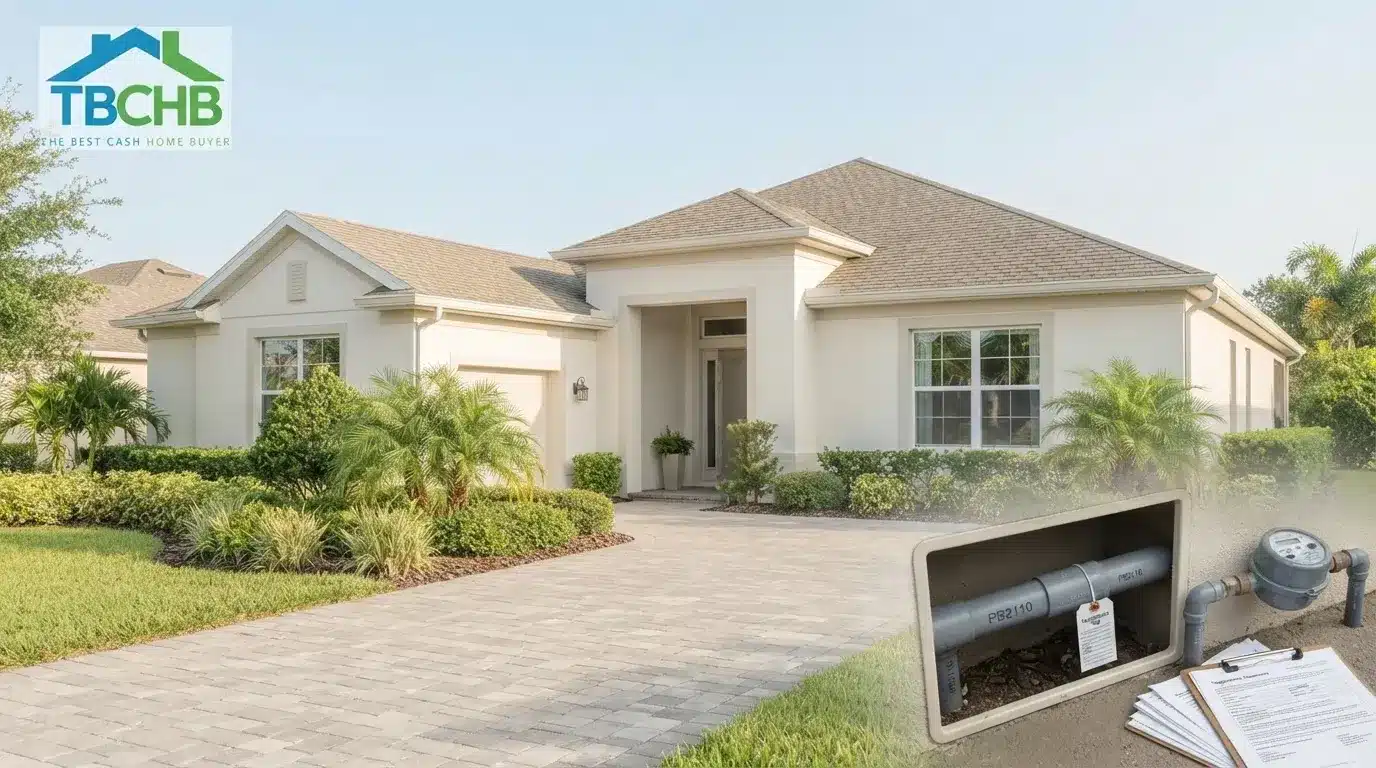
If you searched for polybutylene pipes Florida insurance after a scary email from your insurer or a rough inspection report, take a breath. PB pipes can make insurance and financing harder in Florida, but they do not mean your house is unsellable.
You still have options. You may be able to repipe before selling, negotiate with a buyer, or sell the property as-is to a cash buyer who understands PB and prices the repair into the offer.
I’ve walked through older Florida homes with gray PB lines in the walls, watched traditional deals wobble because of insurance and lender concerns, and helped sellers move on with a cash offer when a repair-heavy sale did not fit their life. In this article, I’ll walk you through how PB affects insurance, what repiping can involve, and how to decide whether to fix it or sell your house as-is.
You might be reading this after a plumber stood in your garage, pointed at a gray line near the water heater, and told you your insurance company might not like the material.
Polybutylene, or PB, is a flexible plastic water supply pipe material that shows up in many older homes. It was used for pressurized water supply lines, not drain lines, and it is different from other plastic pipe materials like PEX and CPVC.
Polybutylene piping, or PB
• A flexible plastic water supply pipe material.
• Often gray or blue in visible areas.
• Used for pressurized water lines, not drain lines.
• Different from PEX and CPVC.
In Florida houses, PB may be visible near the water heater, under sinks, in garages, in walls, or in areas where supply lines come up through the structure. A quick visual check can give you clues, but it is only a starting point. A licensed plumber or home inspector should confirm the pipe material before you make decisions based on it.
Maybe you just called your Florida insurance agent, mentioned that your house has polybutylene pipes, and heard that it could be a problem. Now you’re worried your renewal will be denied or that coverage will become an issue while you are trying to sell.
The real questions are:
1. Will an insurer write or renew a policy on a house with PB pipes at all?
2. If a PB pipe leaks, will the resulting water damage be covered?
Florida carriers may handle PB systems in different ways. Common possibilities include:
• No new policy until the plumbing is replaced. A carrier may decline to write coverage while active PB supply lines remain.
• Conditional coverage. A carrier may ask for proof of replacement or other documentation before it is comfortable with the risk.
• Coverage with limits or exclusions. A policy may treat water damage, known plumbing defects, or repeated leakage in a narrower way than a homeowner expects.
That is why your declarations page, exclusions, endorsements, and any letters from the insurer matter more than generic advice. Ask your agent to put the carrier’s requirements in writing so you know whether the issue is an underwriting problem, a claim-coverage problem, or both.
From a selling standpoint, this can affect whether a financed buyer can close. Even if your current policy is still active, a buyer’s lender usually wants proof that the buyer can insure the property.
A cash buyer still has to think about insurance after closing, but the sale is not waiting on a mortgage underwriter to approve the plumbing before funding.
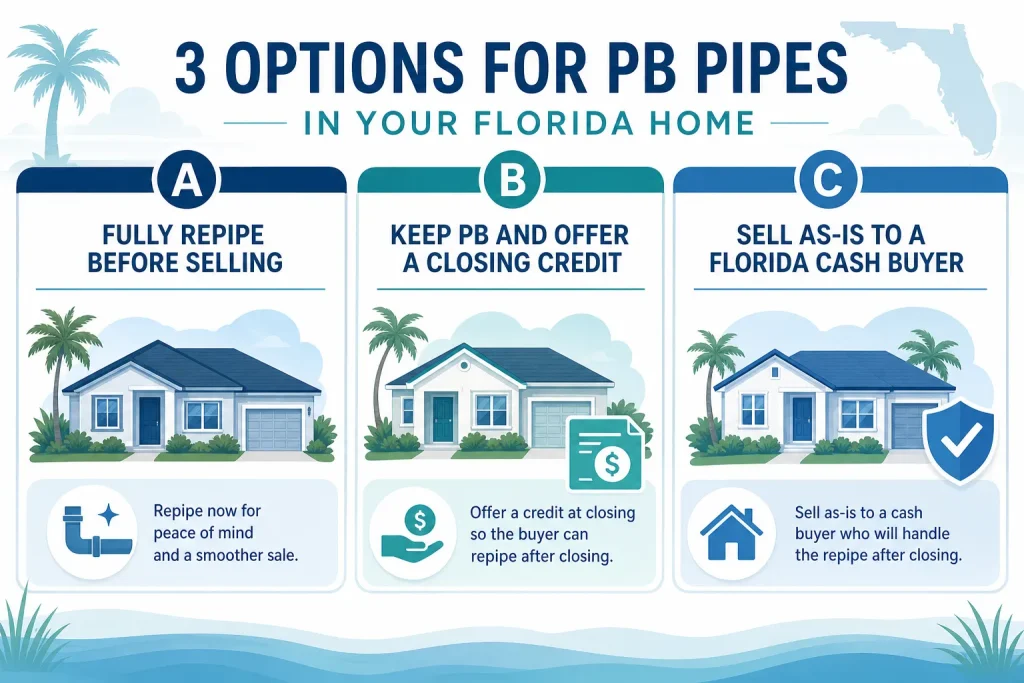
If you’re staring at a repipe estimate that is higher than your savings, it is natural to wonder whether you have to spend that money just to sell the house.
Most sellers look at three paths:
1. Fully repipe before selling.
2. Keep the PB and offer a credit so the buyer can handle the work after closing.
3. Sell the house as-is to a cash buyer who plans to handle the repipe later.
Here’s how those options look from a Florida seller’s point of view.
Pros:
• You may open the buyer pool to more traditional, financed buyers.
• Insurance and appraisal issues may be easier to navigate with newer piping.
• Inspectors have less to flag, which can reduce repair negotiations.
Cons:
• You are taking on a costly project before you know what the final sale will look like.
• You may have drywall cuts, plumbing crews, permits, and inspection steps to manage.
• Scheduling the work can add stress when you are already trying to move, settle an estate, or solve a financial deadline.
This route can make sense if you have cash on hand, flexible timing, and the patience to manage the project before putting the property on the market.
With this option, you list the home, disclose the PB, and agree to give the buyer money back at closing so they can handle the repipe later.
Upside:
• You avoid managing the construction yourself.
• A buyer who really wants the house may feel better knowing money is set aside for the plumbing.
Downside:
• The buyer’s lender and insurer may still object to active PB.
• You can go under contract, lose time, and then end up back on the market if financing or insurance fails.
A credit can solve the negotiation, but it does not always solve underwriting.
Here, you disclose the PB, sell the house as-is, and let the buyer tackle the plumbing after closing.
Pros:
• No construction project to manage.
• No lender condition requiring you to repair the plumbing before closing.
• A simpler path if you are dealing with pre-foreclosure, health issues, probate, or an out-of-state move.
Cons:
• The purchase price will reflect the plumbing and insurance risk the buyer is taking on.
• You are trading some top-line price for speed, certainty, and less stress.
Your decision is not just about the repipe bill versus the cash-offer discount. It is about time, stress, cash on hand, and how many ways a financed sale can get delayed when PB is already known.
If you typed polybutylene pipes Florida insurance into Google after your agent hinted that a repipe might be needed, you are probably most anxious about the price tag.
| Florida home factor | Why it affects the repipe bid |
| Home size and layout | Larger homes and complicated layouts require more pipe runs and labor. |
| Number of bathrooms and fixtures | Each bathroom, kitchen, laundry area, and hose bib can add work. |
| Foundation and access | Slab homes, tight attics, and hard-to-reach walls can make the job more involved. |
| Replacement material | PEX, CPVC, and copper can have different material and labor costs. |
| Finishes and patching | Tile, trim, drywall, paint, and flooring can affect the total project cost. |
A typical repipe quote may include new supply piping, fittings, labor to open access points, basic patching, permits, and inspections. It may not include repainting entire rooms, replacing full tile surrounds, flooring work, or cosmetic upgrades you decide to do while the walls are open.
For your bottom line, compare net proceeds, not just the contract price. One seller might pay for plumbing work, wait through repairs, list with an agent, keep paying holding costs, and hope the buyer’s insurance clears. Another might sell as-is for cash at a lower headline price but avoid the repair bill, commissions, repair negotiations, and lender delays.
I’ve talked to Florida owners who finally got a strong offer from a financed buyer, only to have the inspection report flag PB pipes and suddenly put insurance and lending back on the table.
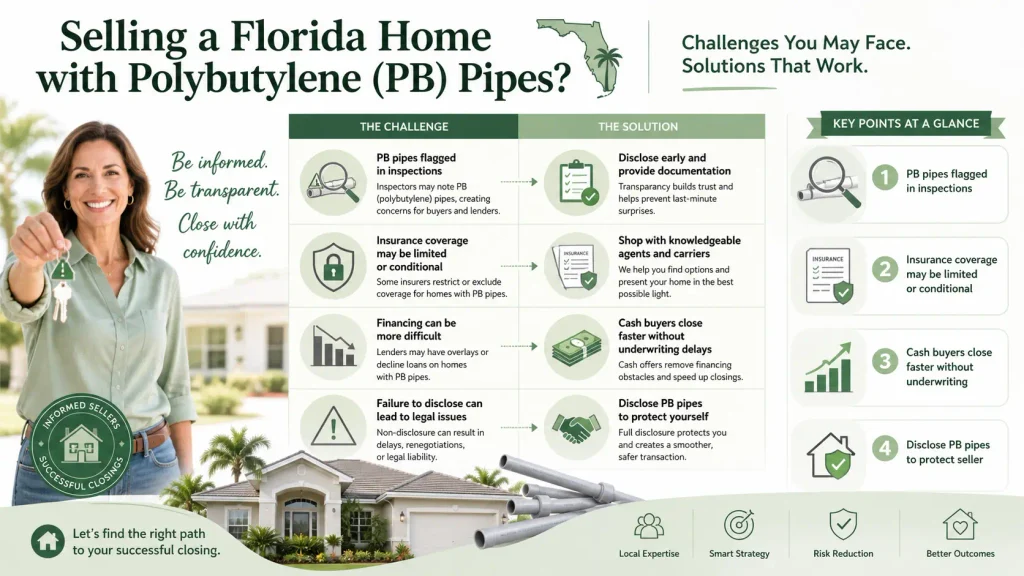
A typical financed-buyer path looks like this:
1. Contract signed.
2. Home inspection.
3. Buyer shops insurance.
4. Appraisal ordered.
5. Loan moves through underwriting.
PB usually becomes an issue during inspection and insurance review.
• The inspector notes the presence of PB supply lines in the report.
• The insurer reviews the risk and may ask for more information, limit coverage, or decline the property.
• The lender may then require proof of acceptable insurance before the loan can close.
You can have a willing buyer and a signed contract, but if insurance and lending do not line up, the deal gets shaky. A seller can end up renegotiating, delaying, or starting over with a new buyer.
Cash buyers still care about future insurance and repairs, but they are not stuck waiting for a buyer’s lender to approve the plumbing before closing. A cash offer can be written with the PB issue already included in the repair budget.
Picture yourself standing in a hallway with fans running after a leak while a plumber holds up a cut section of gray PB pipe. Now you are wondering whether the claim will pay to replace every line in the house.
The key distinction is simple: a homeowners policy may treat sudden water damage differently from the cost to replace old plumbing throughout the home.
In plain terms:
• A covered leak may involve damaged drywall, flooring, cabinets, or other affected areas.
• Replacing every remaining PB line can be treated differently from repairing the damage caused by one leak.
Once PB piping is identified as a known plumbing issue, an insurer may ask more questions, narrow future coverage, change renewal terms, or require corrective work. The details depend on the policy and the carrier.
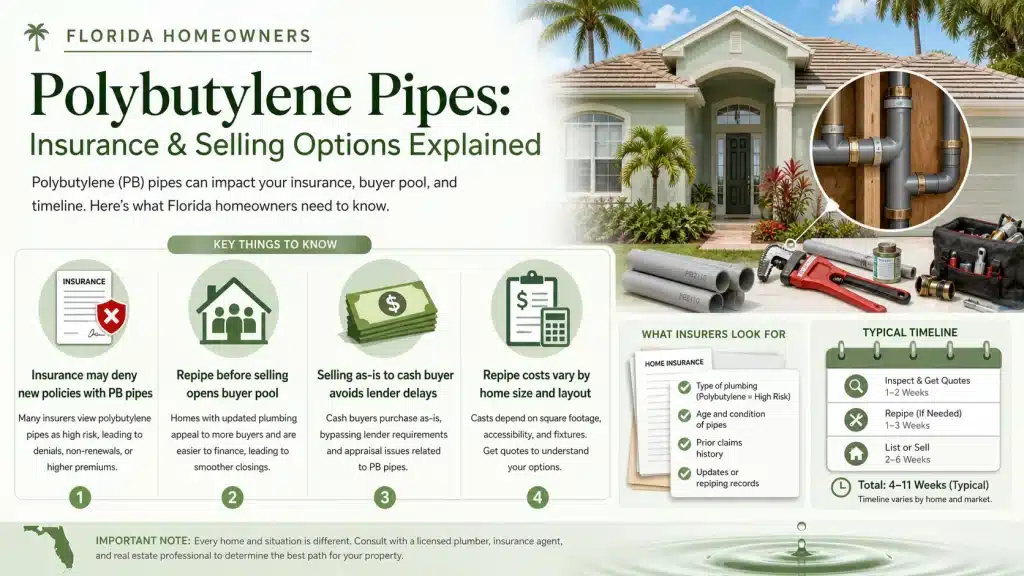
If you know there are PB pipes behind your walls, you might be tempted to stay quiet because you are afraid buyers will get nervous. At the same time, you may worry about being blamed later if a problem comes up.
In Florida, known problematic plumbing can be treated as a material issue that should be disclosed. This article is informational only, not legal advice, but hiding a major known condition rarely helps a seller.
A simple, protective approach looks like this:
• Confirm what you actually have. Hire a licensed plumber or home inspector to identify the piping type.
• Gather your paperwork. Keep inspection reports, plumber estimates, and insurance letters that mention PB in one folder.
• Document visually. Take clear photos of visible PB near water heaters, under sinks, or in the garage.
• Loop in your own advisers. Ask your real estate attorney or agent how PB should be handled on Florida seller paperwork.
• Share early with serious buyers. Let buyers and their representatives see the information upfront instead of hoping an inspector will miss it.
• If selling to a cash buyer, spell it out. Make sure the contract says the buyer knows about the PB and is accepting the property as-is.
Being forthright tends to speed things up with a Florida cash buyer because everyone starts on the same page. There is no last-minute surprise that damages trust or forces a rushed renegotiation.
If you have questions about your exact disclosure duties, talk with a Florida attorney or your own real estate professional before you sign.
For some Florida sellers, the real pressure is not just the plumbing. It is the calendar. Maybe there is a foreclosure date in Orlando, an insurer pushing back on a tenant-occupied St. Petersburg property, or a probate home that an out-of-state heir is trying to settle.
In situations like these, a repipe plus a traditional sale may not fit real life. I see that most often in scenarios like:
• Active foreclosure timelines. You are behind on payments and do not have time to coordinate plumbing work before finding a buyer.
• Serious health issues. You or a family member is dealing with medical problems, and construction in the house feels like too much.
• Sudden job relocation. You need to be in another city or state and cannot manage contractors from the road.
• Out-of-state heirs. You inherited a Florida house and live too far away to supervise bids, repairs, and inspections.
• Limited savings. You do not have the cash to take on a major plumbing project before selling.
In these cases, selling as-is to a local cash buyer can be the simpler path.
A cash offer is usually lower than a perfect-condition open-market sale on paper. The tradeoff is what you skip: no major repipe project before selling, no waiting for an underwriter to approve the plumbing, no showings, no repair lists, and no last-minute insurance surprises from a financed buyer.
The Best Cash Home Buyer is BBB A+ accredited with zero complaints on record as of October 2023, based on its BBB profile. The same BBB profile lists two active Florida DBPR licenses: sales associate SL3503174, expiring 3/31/2027, and broker BK3253871, expiring 9/30/2027. The company also reports having purchased over $50,000,000 worth of houses.
If polybutylene pipes and insurance pressure are keeping you stuck, a written cash offer can give you a clear comparison point before you spend money on repairs.
Coverage depends on your carrier and policy. One question is whether an insurer will write or renew a policy on a home with PB, and a separate question is whether damage from a leak would be covered. Read your declarations, exclusions, and insurer letters, then ask your Florida agent to explain the requirements in writing.
A verified cost range was not supplied in the brief, so this article should not publish with a specific average until a reputable source is added. Actual bids depend on the home’s size, layout, number of bathrooms, access, and replacement material. Get written estimates from licensed Florida plumbers and compare those costs against your likely net from an as-is cash sale.
If you know the home has PB pipes or you have reports mentioning them, treat that as a material issue to discuss with your real estate attorney or agent. Keep inspection reports, plumber bids, insurance letters, and photos together so you can share clear documentation with serious buyers.
Yes. Many owners sell homes with PB pipes as-is, especially to cash buyers who understand the issue and plan to handle repairs after closing. The sale price will reflect the work needed, but you avoid managing the repipe yourself.
Usually not if the buyer is experienced with older Florida homes. A cash buyer can budget for plumbing work, account for insurance challenges, and make an offer based on the property’s current condition instead of requiring you to fix the pipes first.
As a Florida cash buyer, we do not need lender approval to close. We buy houses as-is, including older Florida homes with known polybutylene piping, and we build the expected plumbing work into the offer upfront instead of turning it into a repair fight later.
If you are dealing with PB pipes, insurance letters, foreclosure timing, relocation, or probate, The Best Cash Home Buyer can give you a no-obligation cash offer on your Florida house. There are no commissions and no closing costs to you, and you do not have to complete a repipe before reaching out.
If it would help to see a clear offer, tell us what is going on with the property. We’ll look at the house, account for the plumbing and other repairs, and let you decide whether a faster as-is sale is the right move.
